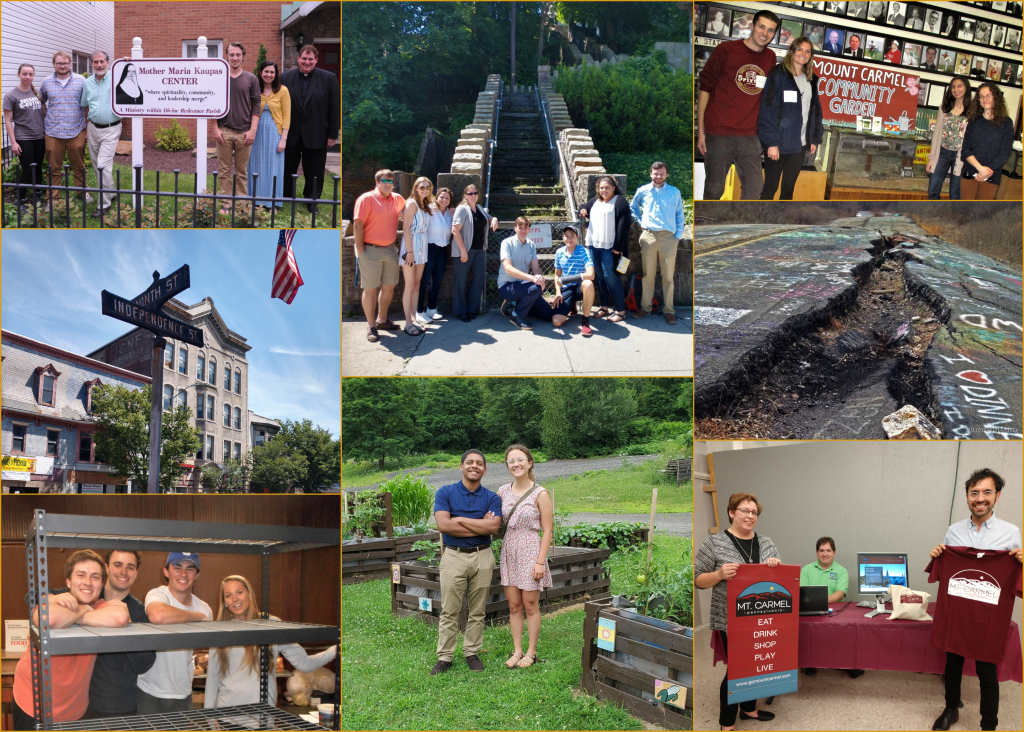
Through partnerships, we collaborate on community-identified priorities in revitalization, local histories and heritage, and future directions.
Our Partnerships
Our anchor partnership with the Mother Maria Kaupas Center in Mount Carmel provided the connection to community that has now grown to partners throughout the Lower Anthracite Coal Region. Partners include local governments, school districts, non-profit organizations, libraries, neighborhood organizations, businesses, and more.
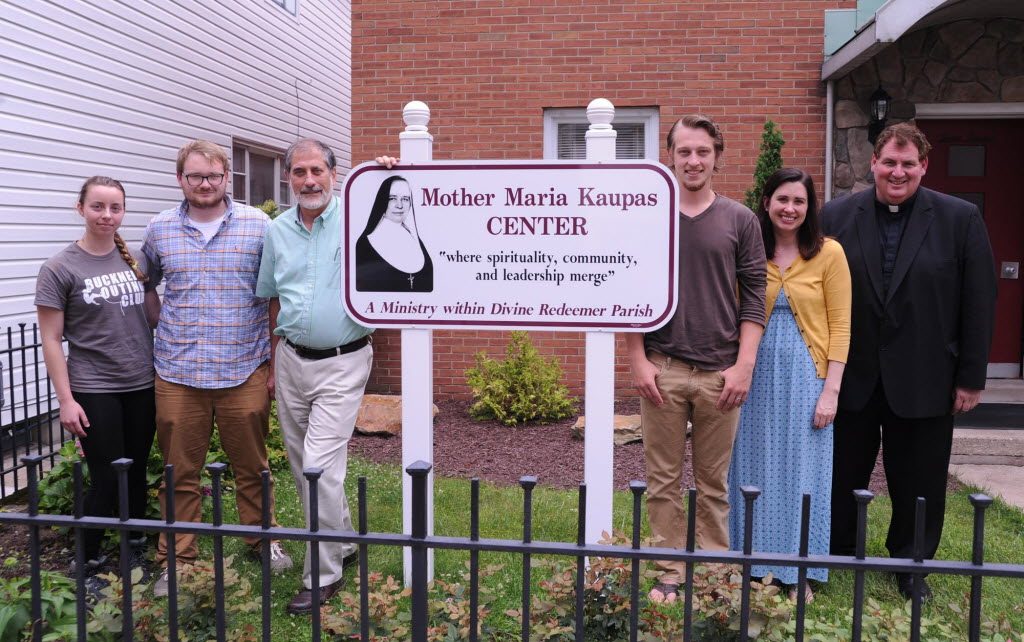
(Mother Maria Kaupas Center, Mount Carmel, with Father Moran.)
What We Do
The CRFS seeks to provide a structure for faculty, students, and staff to collaborate with community partners on a variety of initiatives connected with community revitalization, local histories and heritage, and future directions.

Past: History and Heritage
Revealing the Past to Understand the Region Today

Present: Community Revitalization
Revitalizing Coal Towns Today Through Place-Based Collaboration
Future: Growing Forward
Imagining What Tomorrow Can Be
Building a vibrant future hinges on the planning and action we do today, which is shaped by the experiences of the past. Through the CRFS, we document and listen to the past, revitalize coal towns today through place-based collaboration, and imagine what a new future can bring.
Our Locations
We work with communities throughout the Lower Anthracite Coal Region, largely within the Shamokin Creek Watershed, with the core of collaborations centered in the areas of Mount Carmel, Kulpmont, and Shamokin.
See more about our locations here.
The Coal Region Field Station is part of Bucknell University’s Place Studies Program, situated within the Bucknell Ecology Center.
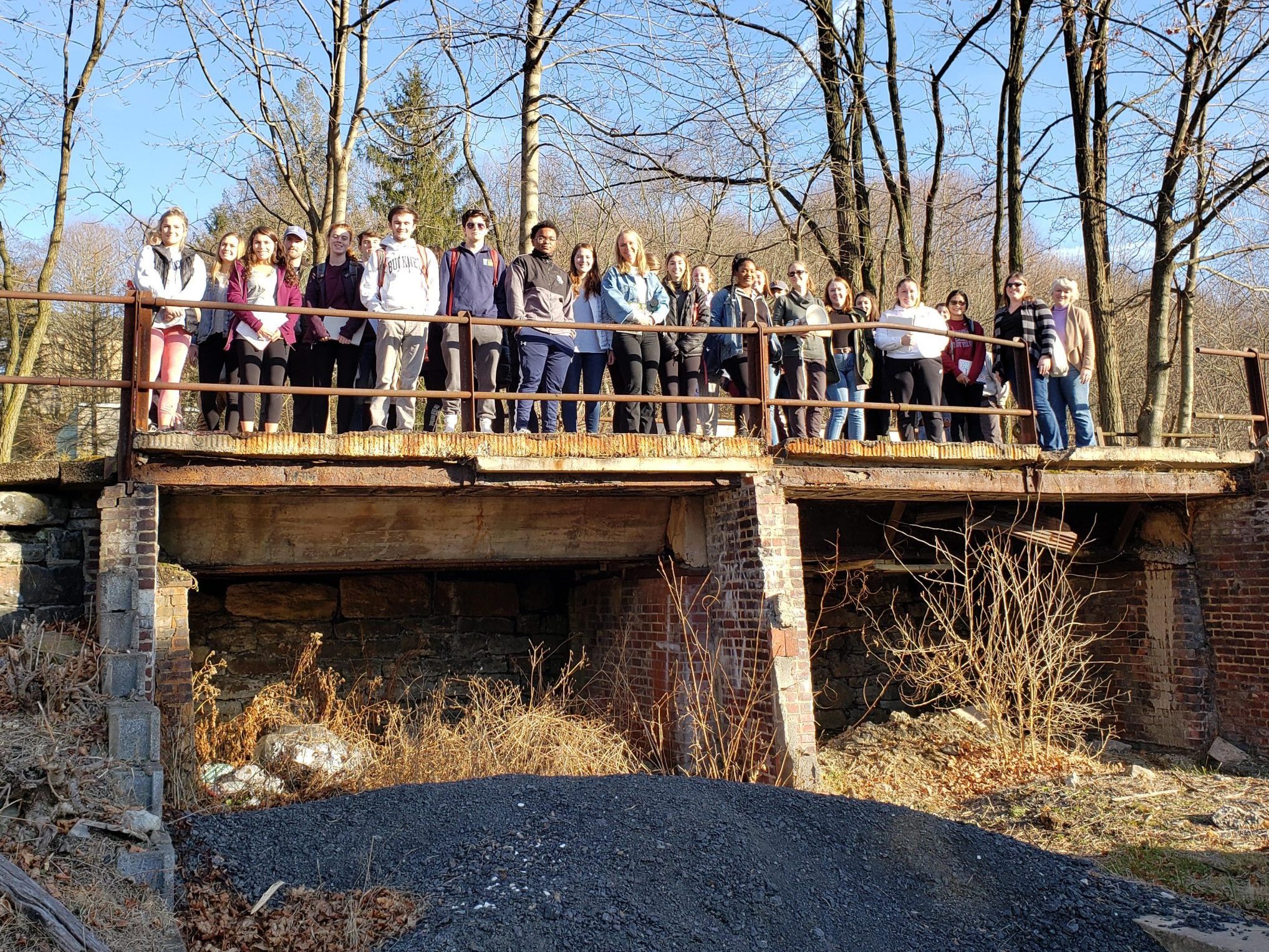
Students stand with community partners at a brownfield site in Shamokin.